
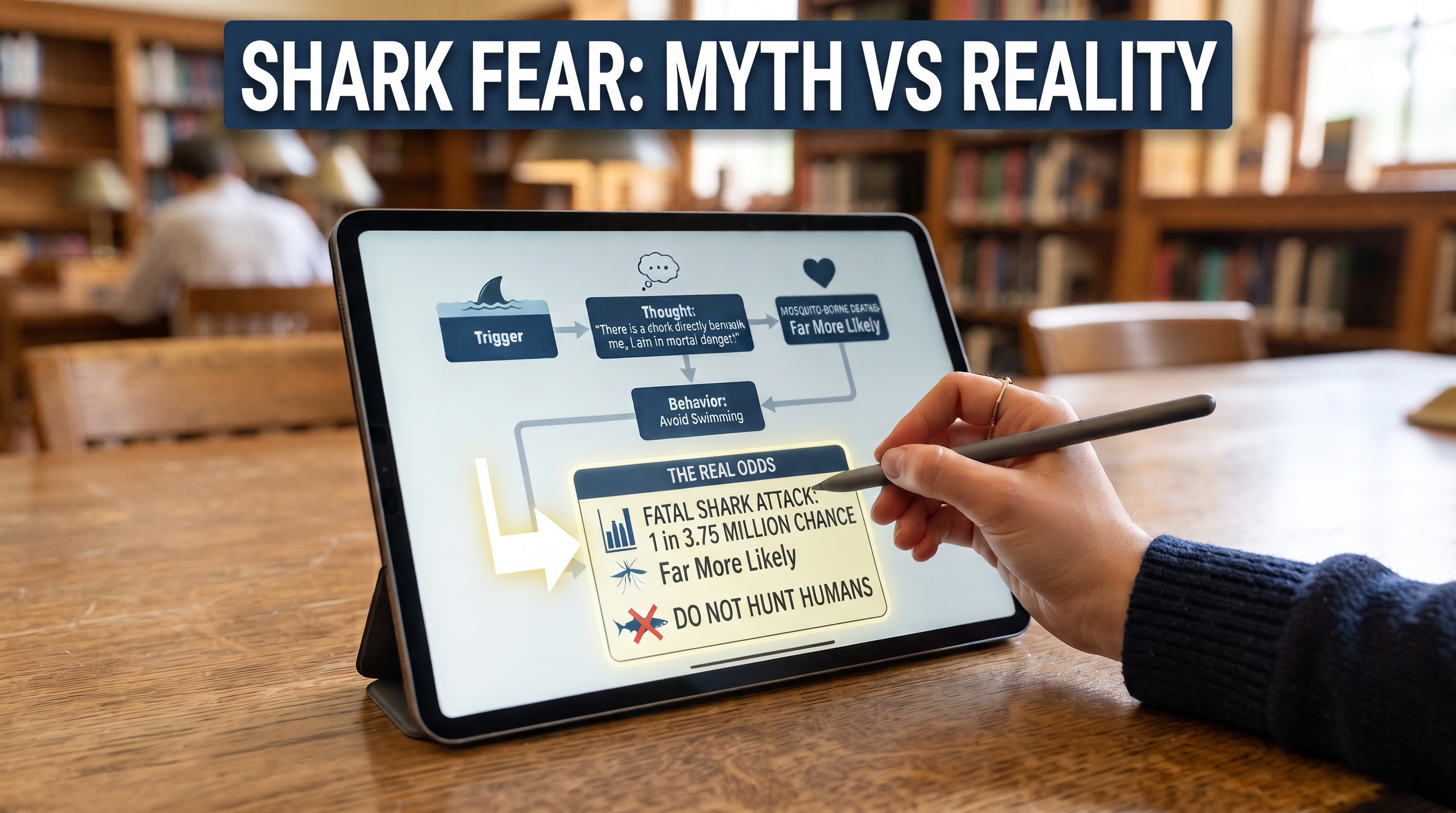
Ever felt a sudden jolt of panic while swimming in deep water, even if you are miles from the ocean or wading in a hotel pool? You might be experiencing galeophobia—the clinical, intense fear of sharks. While humans are land-dwelling mammals who naturally feel out of place in open water, this modern phobia is not just a basic survival instinct. It is a culturally manufactured response, heavily fueled by decades of Hollywood blockbusters.
1. The Genesis: How Jaws Created a Cultural Phobia
Before 1975, sharks were generally viewed by the public as rare maritime nuisances rather than malevolent stalkers. That changed overnight with the release of Steven Spielberg’s masterpiece, Jaws.
- The “Jaws Effect”: The film triggered an unprecedented wave of anxiety, changing how humanity viewed the ocean. It introduced the concept of a rogue, vengeful predator deliberately hunting humans—a narrative that completely distorted actual marine biology.
- The Psychological Hook: Director Steven Spielberg famously concealed the shark for the first half of the film, forcing audiences to project their invisible fears onto dark water, amplified by John Williams’ creeping two-note musical score.
- The Ecological Toll: Tragically, the film inspired a massive surge in sport-fishing tournaments and indiscriminate culling. Peter Benchley, who wrote the original novel, spent his later decades campaigning for ocean conservation, expressing deep regret over how the story demonized the animal.
2. Hollywood’s Evolving Shark Tropes
Following the success of Jaws, Hollywood realized that galeophobia was a goldmine for suspense. Over the decades, studios evolved the genre through distinct phases:
- Natural Survival Thrillers: Modern hits like The Shallows (2016) and 47 Meters Down (2017) tightened the focus onto single protagonists trapped in claustrophobic maritime environments, maximizing immediate physical peril.
- Sci-Fi Escalation: Films like Deep Blue Sea (1999) took the phobia out of the realm of nature entirely, introducing genetically engineered, hyper-intelligent predators to heighten the terror.
By recycling these tropes across generations, cinema successfully wired millions of people to associate open water with mortal danger.
3. Separating Fear from Statistical Reality
To overcome galeophobia, it helps to look at cold, hard facts rather than cinematic fiction. Statistically, sharks are not hunting humans:
- The Real Odds: According to marine databases like the Florida Museum of Natural History’s International Shark Attack File (ISAF), the global odds of being fatally bitten by a shark are exceedingly rare—roughly 1 in 3.75 million to 4.3 million. You are statistically far more likely to be injured by everyday objects, lightning strikes, or lawnmowers.
- Target Mismatch: Out of more than 500 shark species, only a tiny fraction are known to occasionally bite humans, usually as a result of mistaken identity in murky water. Humans are simply not part of their natural diet.
4. Managing and Overcoming Galeophobia
Specific phobias like galeophobia can cause severe behavioral avoidance, keeping people away from beaches, aquariums, and water-based recreational activities. Fortunately, evidence-based psychological treatments can help reset the brain’s alarm system:
- Cognitive Behavioral Therapy (CBT): Helps individuals identify catastrophic thinking patterns—such as “There is a shark directly beneath me and I am in mortal danger”—and reframe them using objective statistical evidence.
- Gradual Exposure Therapy: A structured, step-by-step approach supervised by professionals. This can begin safely away from the water—such as reading marine biology facts, viewing educational documentaries, or observing sharks safely behind glass at a controlled public aquarium—gradually lowering the anxiety response over time.
By replacing Hollywood myth with scientific reality, it is entirely possible to break the cycle of avoidance and enjoy the ocean with a healthy, balanced perspective.
References & Further Reading
- Florida Museum of Natural History. International Shark Attack File (ISAF): General Shark Attack Statistics.
- Benchley, Wendy. (2024). Jaws at 50: A Legacy of Shark Awareness and Action. WildAid.
- Chapman University. (2024). Survey on American Fears: Public Perceptions of Marine Predators.
- Hurak Learning. Galeophobia: Understanding and Managing the Intense Fear of Sharks.

Leave a Reply