
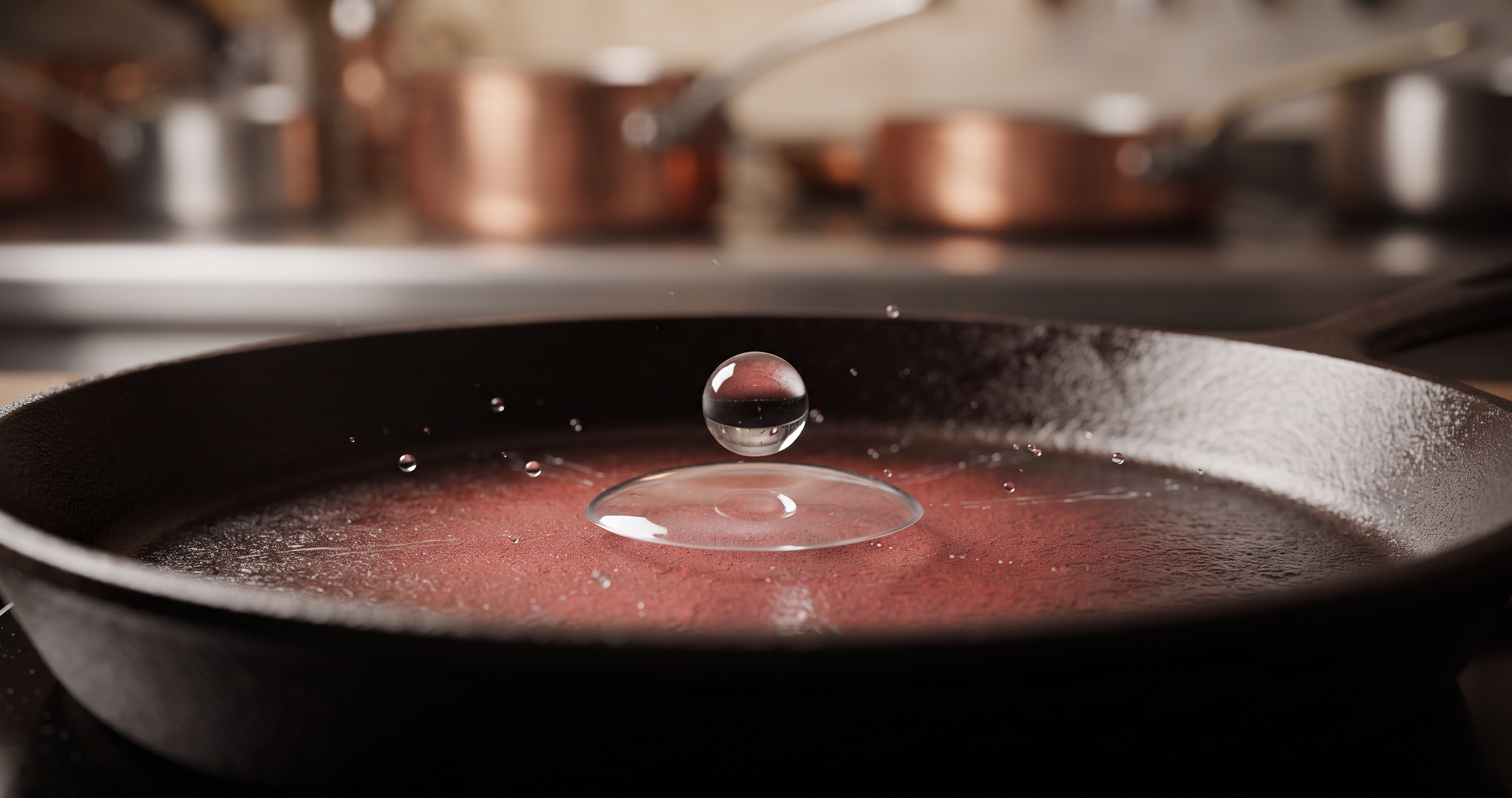
Have you ever tossed a drop of water onto a scorching hot pan and watched it effortlessly slide around instead of instantly evaporating? Rather than boiling away right on contact, the water droplets glide across the metal surface like tiny hockey pucks on ice. It might look like magic, but it is actually a fascinating and counterintuitive phenomenon of physics known as the Leidenfrost Effect.
Let’s dive into how this thermodynamic trick works, why chefs rely on it, and the crucial safety warning every home cook needs to know.
What is the Leidenfrost Effect?
When a pan is heated past a critical threshold—typically over 190°C—something incredible happens to the water.
- Instant Vaporization: The immediate bottom of the water droplet vaporizes the second it touches the extreme heat of the metal.
- The Steam Cushion: This sudden flash of gas creates a thin, microscopic layer of insulating steam right underneath the droplet.
- Levitation: This cushion of vapor actually levitates the rest of the liquid drop, preventing direct contact between the liquid water and the scorching hot pan.
Because steam acts as a barrier, this vapor cushion protects the rest of the droplet from boiling away instantly, allowing it to stay intact and zip across the surface with minimal friction.
Practical Applications and Kitchen Wisdom
The Leidenfrost Effect isn’t just a cool physics party trick; it has real-world uses in the kitchen and important safety implications:
- The Chef’s Test: Professional cooks use this exact principle to check if a skillet is hot enough for searing. If a dropped splash of water skitters across the surface, the pan has reached the Leidenfrost point and is ready for cooking.
- Precision Cooking: This protective barrier allows chefs to manage high-heat cooking techniques effectively without instantly destroying moisture.
The Dangerous Flip Side: Kitchen Safety
While water dancing on a hot skillet is harmless, the physics behind the Leidenfrost Effect can turn dangerous when mixed with hot oil.
- Splatter Hazards: If a wet piece of food drops into boiling hot oil, the sudden vaporization creates an aggressive steam cushion that violently backfires, causing hot oil to splatter everywhere. Always pat your food dry before frying!
- Grease Fires: Never throw water at a grease fire. The sudden steam expansion will instantly cause an explosive flare-up.
Key Takeaways
- Physics in Action: Water levitates on a superheated surface due to an insulating layer of steam.
- Frictionless Movement: The vapor barrier allows droplets to slide effortlessly across hot pans.
- Safety First: Understanding thermal dynamics helps you master your cooking techniques while avoiding dangerous oil splatters.
Bibliography
- Physics Central. The Leidenfrost Effect. American Physical Society. Available at: https://www.physicscentral.com
- Exploratorium. Science Snacks: Leidenfrost Effect. Available at: https://www.exploratorium.edu

Leave a Reply