
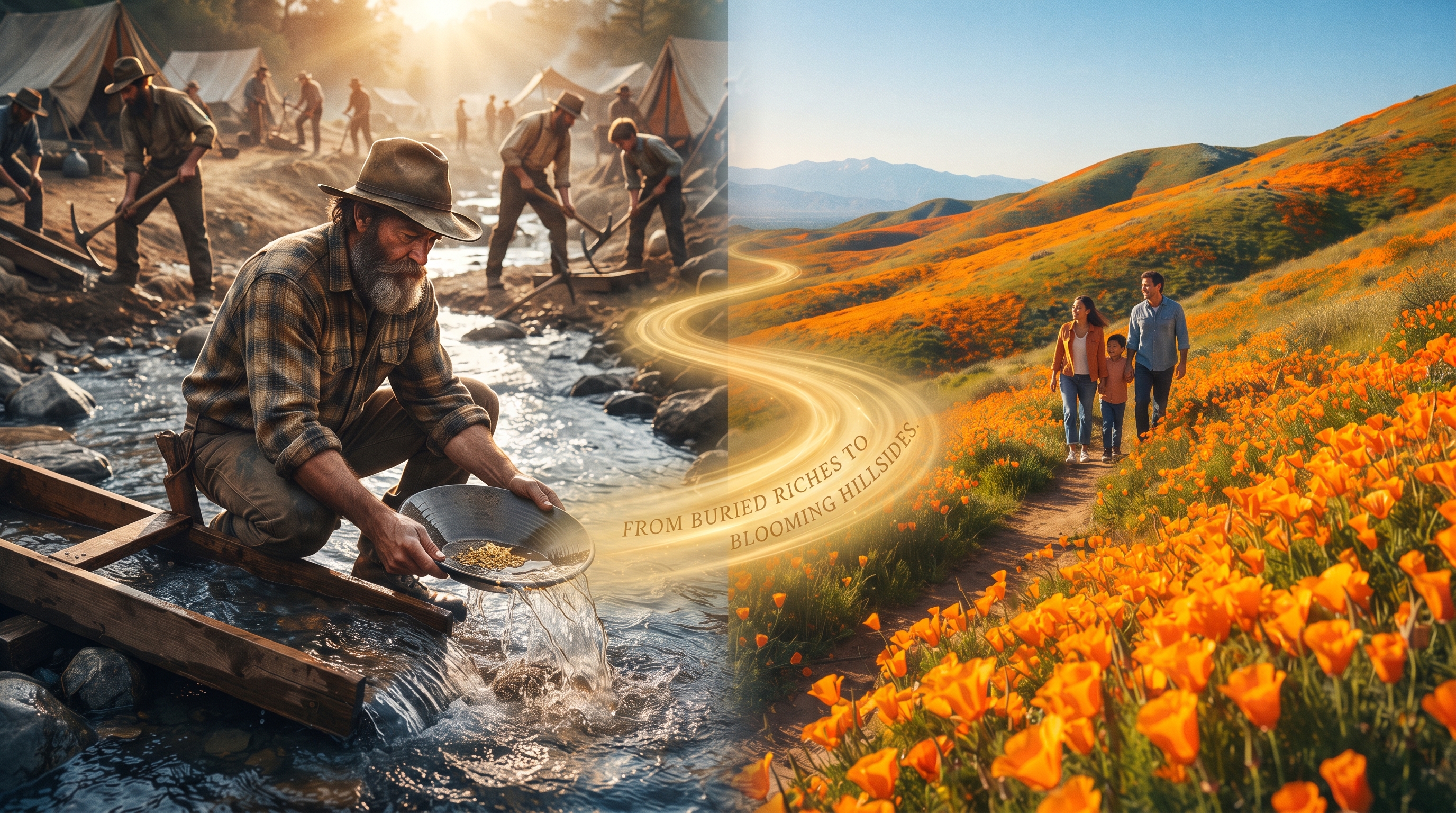
When you think of California, images of endless sunshine, Hollywood glamour, and scenic coastal beaches instantly come to mind. But do you know how it actually earned its iconic nickname, “The Golden State”? It has very little to do with the sunny weather and everything to do with a combination of historical discovery and natural wonder.
The Spark That Started It All: The Gold Rush
The story kicks off in January 1848, when James W. Marshall discovered glistening flakes of gold at Sutter’s Mill in Coloma. Word spread like wildfire across the globe, sparking the legendary California Gold Rush. Thousands of hopeful prospectors dropped their plows, packed up their lives, and raced west to stake their claims in the rugged dirt, forever altering the economic and social fabric of the American West.
Nature’s Own Gold: The California Poppy
Of course, buried treasure in the mines wasn’t the only source of the state’s golden identity. If you look across the landscape in the spring, you will witness millions of brilliant, bright orange California poppies blanketing the hillsides. Early settlers affectionately referred to them as “coastal gold”—a living, breathing treasure that mirrored the precious metal hidden deep beneath the earth. It was a natural beauty that perfectly matched the riches extracted from the mines.
Making It Official
While residents and writers had used the nickname informally for decades, the California State Legislature finally made “The Golden State” official in 1968. From buried mineral riches to rolling hillsides blooming with vibrant wildflowers, the name stuck for good, celebrating a legacy of ambition and natural splendor.
Watch the full cinematic journey here:
Bibliography & References
- California State Library. (2025). State Symbols and Nicknames: The Golden State History. State of California. https://www.library.ca.gov/
- History.com Editors. (2024). The California Gold Rush of 1848. History.com. https://www.history.com/
- National Park Service (NPS). (2025). California Poppies and State Floral Heritage. U.S. Department of the Interior. https://www.nps.gov/

Leave a Reply